
Examples of Creative Photography Challenges
These creative photography challenges showcase images captured as shot in camera and presented without post-processing. What you see is the photograph as I chose to create it at the moment the shutter was released.
For me, photography often begins long before an image is viewed on a screen. It starts with noticing light, exploring a subject, choosing a point of view, and deciding what to include or leave behind. It involves patience, observation, and a willingness to work within the opportunities and limitations presented by the scene.
Many of these photographs were created in response to challenges explored by Exposures Lite, a group of photographers who share ideas, techniques, and creative exercises. While the challenges were open to all participants, the images presented here are my own interpretations. Although the group experience helped inspire the work, I have chosen to display only my photographs, as I did not seek permission to publish the work of other participants.
The accompanying notes describe the challenge, my approach, and some of the in-camera decisions that shaped each image. They are not intended as technical recipes. Instead, they offer a glimpse into the thought process behind the photograph and the choices made before the shutter was pressed.
Taken together, these images represent more than completed photographs. They reflect moments of exploration, problem-solving, and creative decision-making. They remind me that photography is not only about what we capture, but also about how we see.
I invite you to explore the images, read the stories behind them, and consider the decisions that transformed an observation into a photograph.
The Story Behind These Creative Photography Challenges
Approach
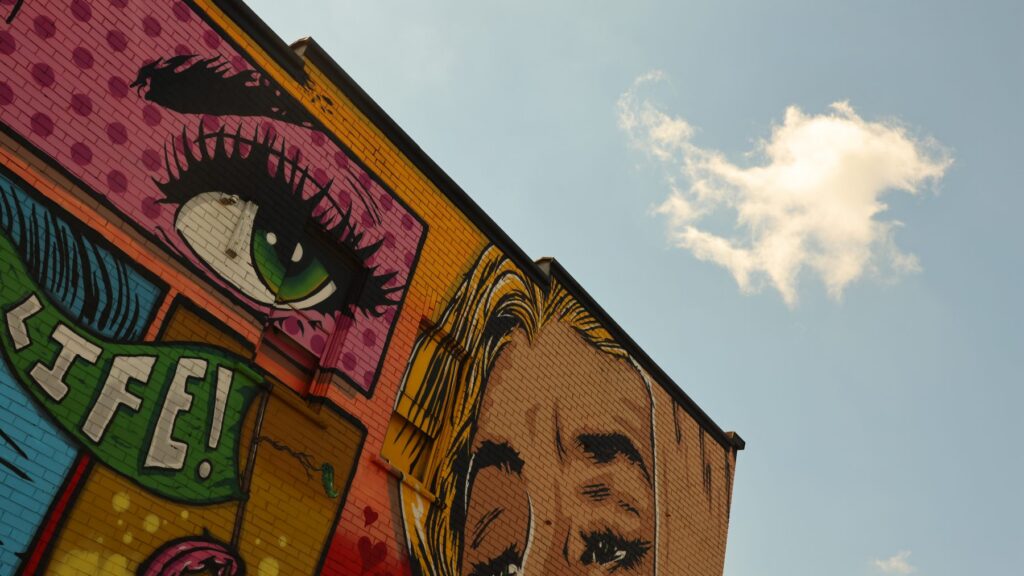
Curiosity is one of the newest challenges in the 2026 Exposures Lite series, continuing our practice of using themed assignments to encourage observation and creative exploration. While driving through North Hamilton, I was repeatedly drawn to this mural and its striking eye. On this visit, a passing cloud created an unexpected visual relationship that transformed the scene from a simple record of street art into a photograph about noticing connections. By composing the image to include both the mural and the surrounding sky, I aimed to create a photograph that rewards a second look and encourages viewers to ask their own questions about what they are seeing.
In-Camera Decisions
This image was photographed handheld to allow quick adjustments as the cloud slowly changed shape and position. I tilted the camera upward to emphasize the scale of the mural and to create a strong diagonal line through the frame. Leaving a large amount of negative space was a deliberate choice. Rather than filling the frame with the artwork, the empty sky gives the cloud room to become part of the composition and encourages the viewer’s eye to move between the mural and the open space. A relatively deep depth of field was used to keep both the mural and cloud clearly defined.
What Made It Work
The image succeeds because it creates a visual conversation between two unrelated subjects. The mural’s eye naturally draws attention first, but the viewer quickly notices the cloud suspended in the otherwise empty sky. The mind instinctively searches for a connection, creating a sense of curiosity and narrative. The strong colours and graphic shapes of the mural contrast with the soft, fleeting form of the cloud, while the generous negative space prevents the composition from feeling crowded. The photograph rewards a second look because it leaves the viewer with a question rather than an answer.

Approach
Double Exposure was one of the most memorable challenges in our ongoing series because it encouraged members to move beyond documenting a subject and instead create a photograph that communicated an idea. While the technique has its roots in film photography, modern cameras allow photographers to combine multiple exposures in-camera, opening creative possibilities that many of us had never explored before.
With the permission of a friend, I created two separate exposures. In the first, her hands covered her eyes. In the second, her hands moved away, revealing part of her face. Combining the two images allowed me to create a photograph that explores communication, perception, and the way we choose what to reveal or conceal.
In-Camera Decisions
Because the final image would combine two exposures, I wanted both frames to remain simple and uncluttered. I positioned my subject close to the camera and selected an aperture that would maintain enough facial detail while allowing the background to soften. The photograph was made handheld, requiring careful alignment between exposures as my subject changed position.
I chose to work in monochrome because colour added little to the message of the image. Removing colour simplified the composition and allowed the viewer to focus on the overlapping shapes of the hands, eyes, and facial expression that form the visual narrative.
What Made It Work
The strength of this image comes from the tension between what is hidden and what remains visible. At first glance, the viewer sees a portrait disrupted by multiple hands, but a closer look reveals an eye peering through the layers of the image. The photograph invites questions rather than providing immediate answers.
The overlapping exposures create a sense of uncertainty that supports the theme, encouraging viewers to spend more time exploring the photograph. That moment of discovery transforms a technical exercise into an image about observation, perception, and human expression.
Approach
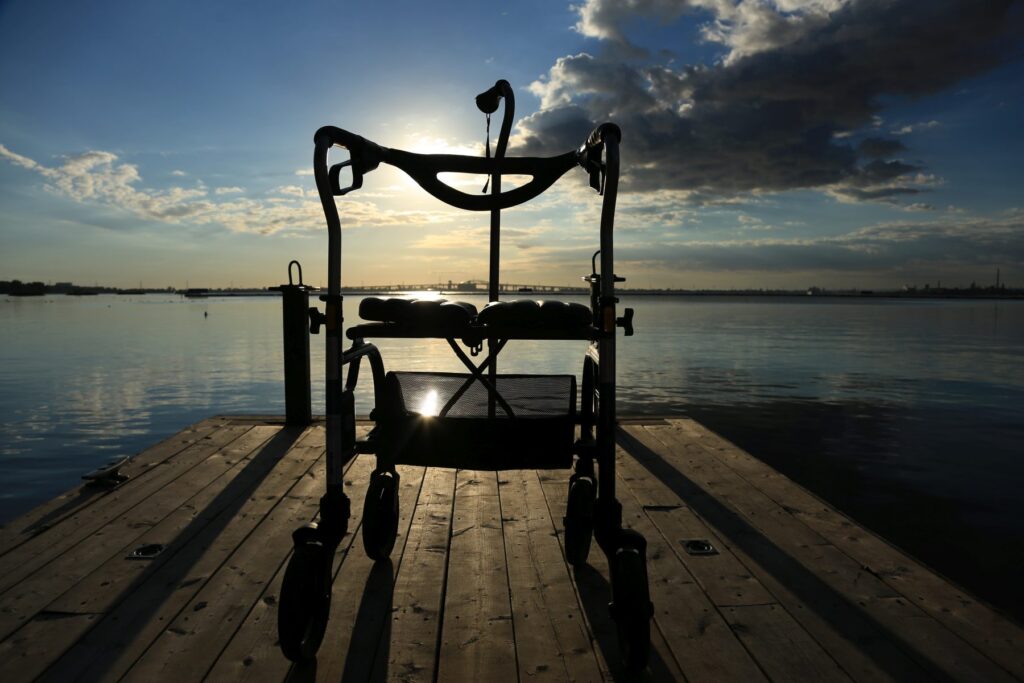
While photographing a reflections challenge at the marina, I noticed the rising sun shining through my walker. The scene had nothing to do with the original assignment, but the relationship between the light and the shape of the walker immediately caught my attention. I decided to explore the image and later share it with the group because it reflects an important photographic lesson: sometimes the most meaningful photograph is not the one you set out to make.
In-Camera Decisions
While photographing the water reflections challenge, I noticed how the rising sun was casting long shadows from my walker across the dock. Moving to a low vantage point allowed me to emphasize those lines and the reflections around them. I chose to silhouette the walker against the sunrise and positioned the horizon higher in the frame to draw attention to the dock, where the strongest visual elements of the scene were unfolding.
What Made It Work
This image succeeds because it incorporates a personal subject into the photographic exploration for the day. The early morning sunrise and calm water create a peaceful atmosphere, while the long shadows along the dock guide the viewer’s eye toward the sun shining through the walker. The combination of light, shape, and timing transforms an everyday object into a strong compositional element. There is often a great deal to see when out with a camera, and sometimes all it takes is a simple turn of the head to discover an unexpected photograph..
Approach
Look Again is part of our recent series of challenges designed to encourage photographers to see familiar subjects from unfamiliar perspectives. Rather than searching for a rare or exotic subject, I wanted to photograph something that most people pass every day without a second thought.
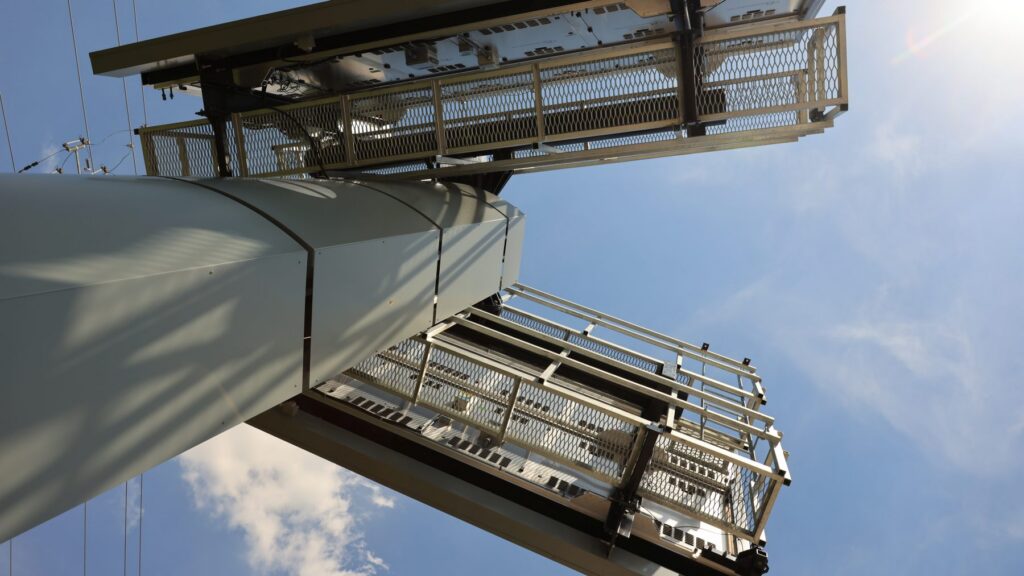
This image was made beneath an electronic billboard in a local transit parking lot. By positioning myself directly underneath the structure and photographing upward, I was able to transform a common piece of urban infrastructure into a more abstract study of shape, scale, and perspective. The challenge was not simply to record the billboard, but to present it in a way that encourages the viewer to pause and reconsider what they are seeing.
In-Camera Decisions
I chose an extreme upward viewpoint to emphasize the height and weight of the structure while allowing the support column to act as a strong visual anchor within the frame. The diagonal elements of the catwalks and framework create leading lines that draw the viewer’s eye through the image.
Exposure was adjusted slightly to preserve detail in the bright sky while deepening the shadows along the column and underside of the structure. I intentionally allowed the upper portions of the billboard to extend beyond the frame. By withholding part of the subject, the composition creates a small amount of visual tension and invites the viewer to mentally complete the scene.
What Made It Work
Most viewers recognize the subject only after spending a few moments with the photograph. The unusual perspective removes the billboard from its everyday context and turns it into a collection of geometric forms, shadows, and intersecting lines.
The image succeeds because it rewards a second look. Initial curiosity leads to discovery as viewers begin to understand the scale and purpose of the structure. The strong diagonals, dramatic perspective, and incomplete framing all contribute to a photograph that asks the viewer to engage with an ordinary subject in an unexpected way, which is exactly the goal of the Look Again challenge.
Approach
The Faces in Things challenge explores a phenomenon called pareidolia: our tendency to recognize familiar patterns, especially faces, in everyday objects. Rather than creating a portrait, the goal was to discover one that already existed in nature.
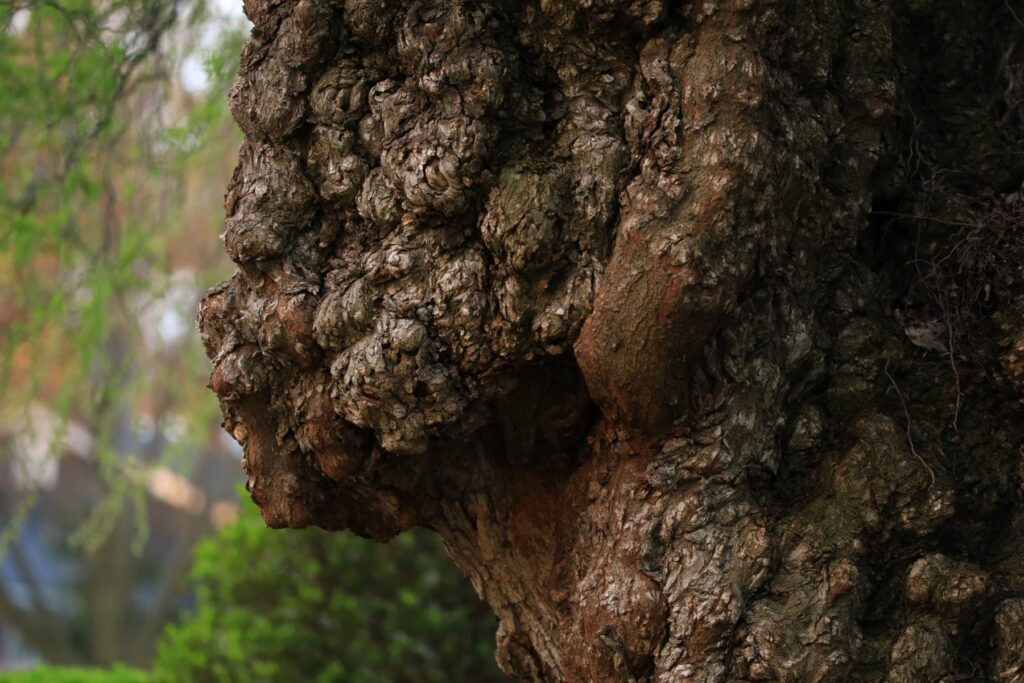
This image was found in the bark of a mature tree in our neighbourhood. Depending on the direction of light and the season, different expressions seem to emerge from the texture of the trunk. What attracted me to this particular face was its strong profile and the sense that it appears to be quietly observing the garden around it. The challenge was to isolate that discovery and present it in a way that encourages viewers to make the same connection.
In-Camera Decisions
The photograph was made early in the morning when the softer light created gentle shadows within the bark’s deep texture. Those shadows helped define the facial features without creating harsh contrast that might distract from the illusion.
I used a telephoto lens at 200mm to isolate the section of the trunk that contained the strongest facial form while compressing the background into a soft blur. A relatively wide aperture helped separate the subject from its surroundings and kept attention on the textures and shapes that create the impression of a face. The higher ISO allowed the image to be handheld while preserving the subtle qualities of the morning light.
What Made It Work
The image succeeds because it embraces ambiguity rather than certainty. While the challenge was to find a face in an everyday object, many viewers discover more than one face within the bark. Some see a profile looking outward, others find additional faces hidden in the shadows and textures. Each interpretation is slightly different, encouraging viewers to spend more time exploring the image.
The shallow depth of field removes distractions and allows attention to remain on the patterns, textures, and shadows that create these facial impressions. The close framing prevents the eye from immediately identifying the subject as a tree, extending the moment of discovery. As viewers continue to examine the image, new features and expressions seem to emerge, creating a photograph that rewards curiosity and repeated viewing.
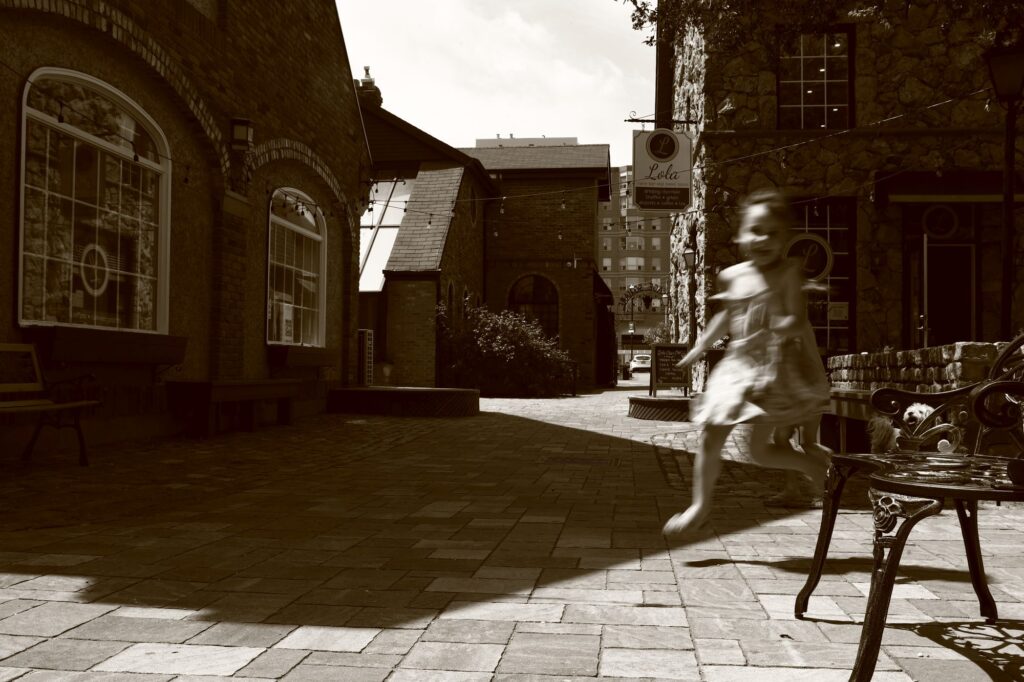
Approach
This image was created as part of a five-part challenge: photograph north, south, east, west, and straight down. For this image, I chose to shoot west from Burlington Village Square. To create a low perspective, I spread the tripod legs as wide as possible and positioned the camera close to the ground. Using the camera’s remote app allowed me to make the exposure without drawing attention to myself or looking directly at the subject.
In-Camera Decisions
I selected the Monochrome picture style with a sepia filter to create a timeless feel. While the slower shutter speed was not intentional, it introduced motion that enhanced the energy of the running child near the chocolate shop.
What Made It Work
The sepia treatment and subtle motion blur create a nostalgic atmosphere. The choice of f/18 provides substantial depth of field, allowing details throughout the scene to remain visible, including the dog partially hidden beneath the bench in the lower right corner.
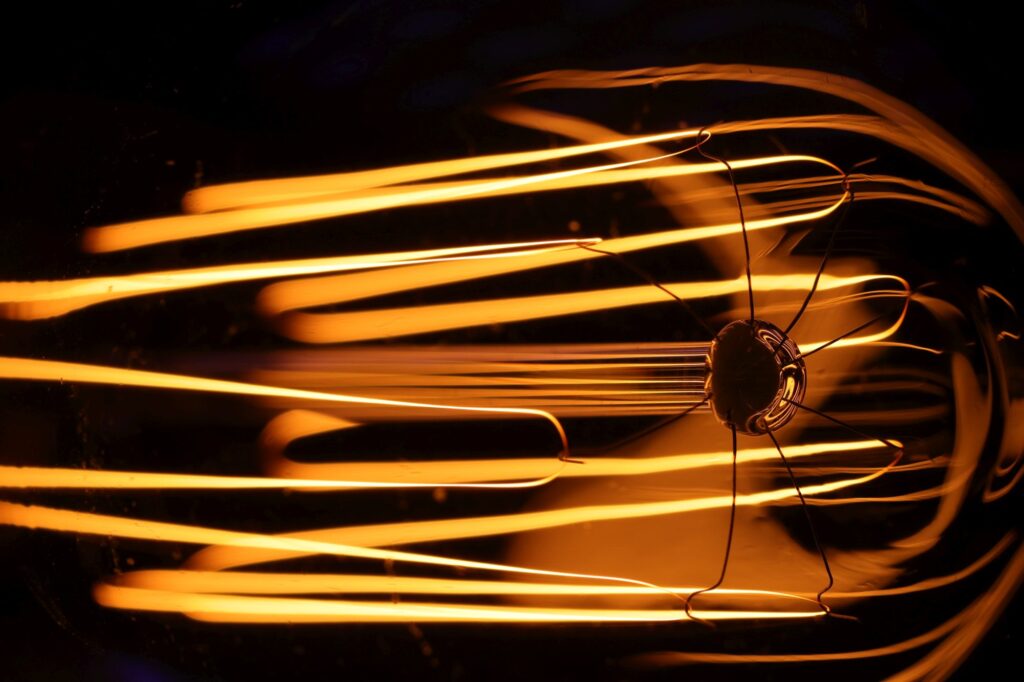
Approach
The challenge was to use artificial or available light to shape colour, contrast, and mood in a low-light environment. I chose an Edison-style bulb because its exposed filaments create intricate lines of light and warm colour. Using a macro lens allowed me to isolate the glowing filaments and explore the abstract patterns hidden within an everyday object, while a darkened studio environment helped eliminate distractions and emphasize the light itself
In-Camera Decisions
I mounted the camera on a tripod to ensure precise composition and stability while working at close range. Using spot focus, I carefully positioned the plane of focus on the filament support structure to maintain sharp detail within the bulb. The dark studio allowed the illuminated filaments to dominate the frame, while a warm white balance setting preserved the rich amber tones that are characteristic of Edison bulbs. I composed the image horizontally to emphasize the flow and repetition of the glowing lines across the frame.
What Made It Work
The strength of this image lies in its ability to transform a familiar household object into an abstract study of light and form. The glowing filaments create sweeping lines that carry the viewer’s eye across the frame, while the warm amber tones evoke a sense of warmth and nostalgia. The dark background removes distractions and allows the illuminated structure to stand out with clarity and contrast. By moving in close with a macro lens, the photograph reveals details that are rarely noticed, encouraging the viewer to see an everyday object from a completely different perspective.
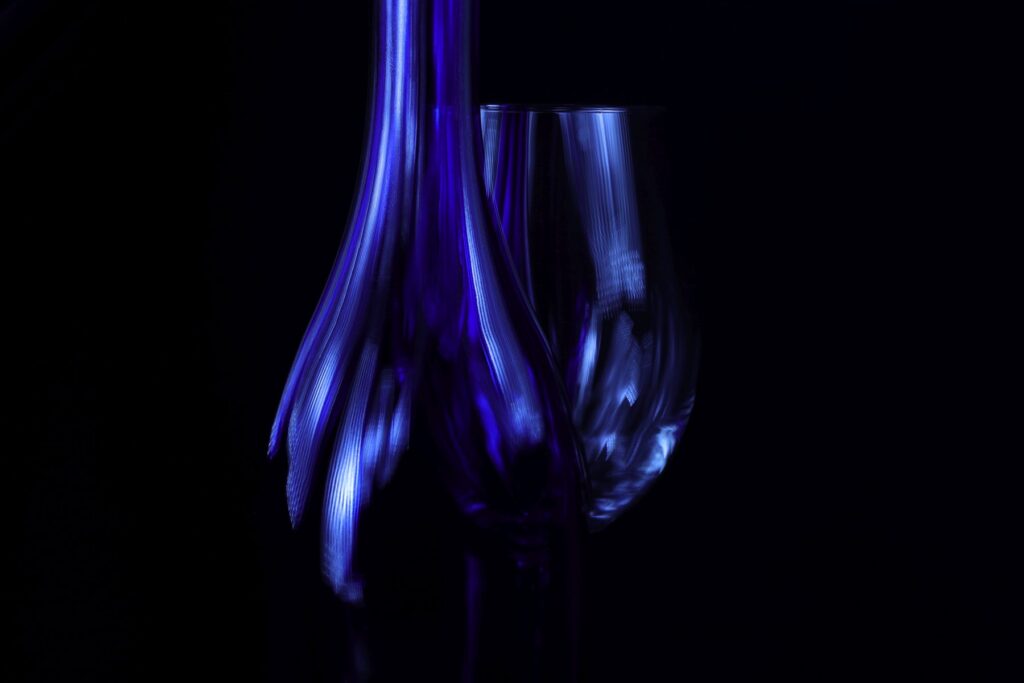
Approach
This challenge was to explore long exposures and learn how to paint with light. During the pandemic, it provided an opportunity to experiment at home while developing a new technique. I chose a wine bottle and glass because of their elegant curves and reflective surfaces. My goal was to use light not simply to illuminate the subjects, but to trace their shapes and reveal them in a more abstract and artistic way.
In-Camera Decisions
Light painting requires complete control over both the camera and the light source, so I mounted the camera on a tripod and used a 100mm lens to isolate the subjects within the frame. To maximize image quality, I selected ISO 50 and an aperture of f/16, resulting in a sixteen-second exposure. During the exposure, I used a portable LED light to carefully paint highlights across the bottle and glass. The process required several attempts, as small changes in the movement, angle, or duration of the light produced dramatically different results.
What Made It Work
The success of this image comes from the selective use of light. Rather than revealing the entire bottle and glass, the light traces only portions of their shapes, allowing the viewer to complete the image in their imagination. The flowing highlights emphasize the curves of the glass while the dark background removes distractions and creates a sense of mystery. The cool blue tones add a dreamlike quality, transforming familiar objects into something that feels abstract.
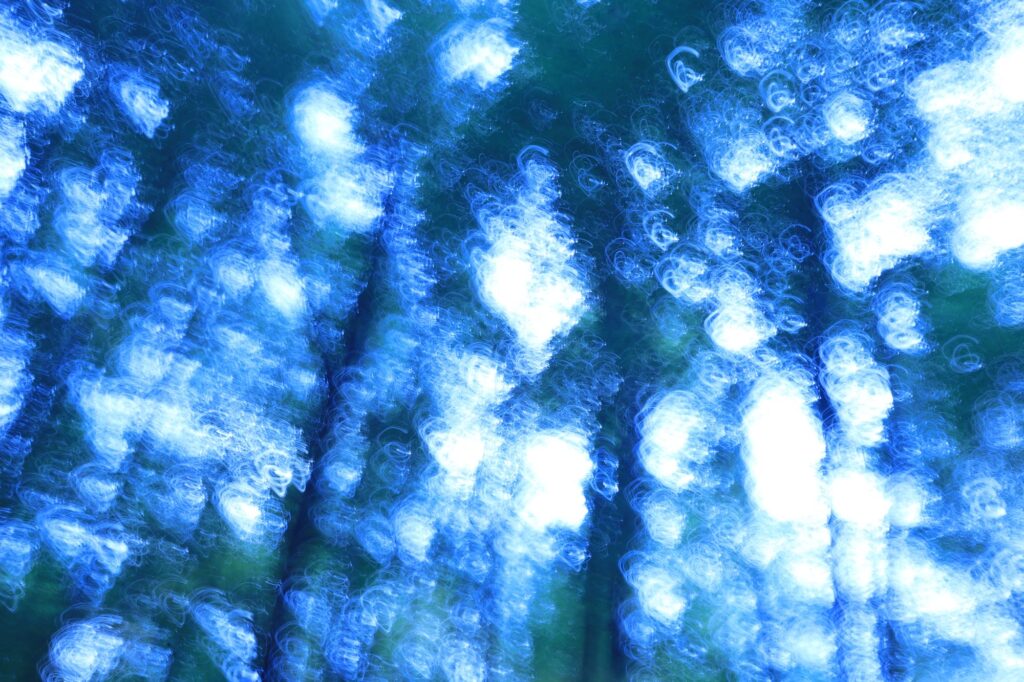
Approach
This was the beginning of a strange and wonderful journey. The challenge of intentionally moving the camera during the frame being captured was counter-intuitive to me but this really opened my eyes to a more creative approach to photography. I chose a group of trees viewed from a low vantage point and set the camera’s white balance to a custom setting. The bright gaps between the trees provided points of light that I hoped would interact with the camera movement.
In-Camera Decisions
I changed the white balance to custom and set the colour temperature to about 4000k. The camera was handheld and, during the exposure, I moved it in small circular motions. The 1.6-second shutter speed allowed these movements to transform the highlights into repeating patterns and swirls.
What Made It Work
The cooler colour temperature shifted the scene toward blue tones, while the long exposure transformed sunlight filtering through the trees into luminous circular patterns. Together, these choices created a dreamlike image that feels more like a memory than a photograph.
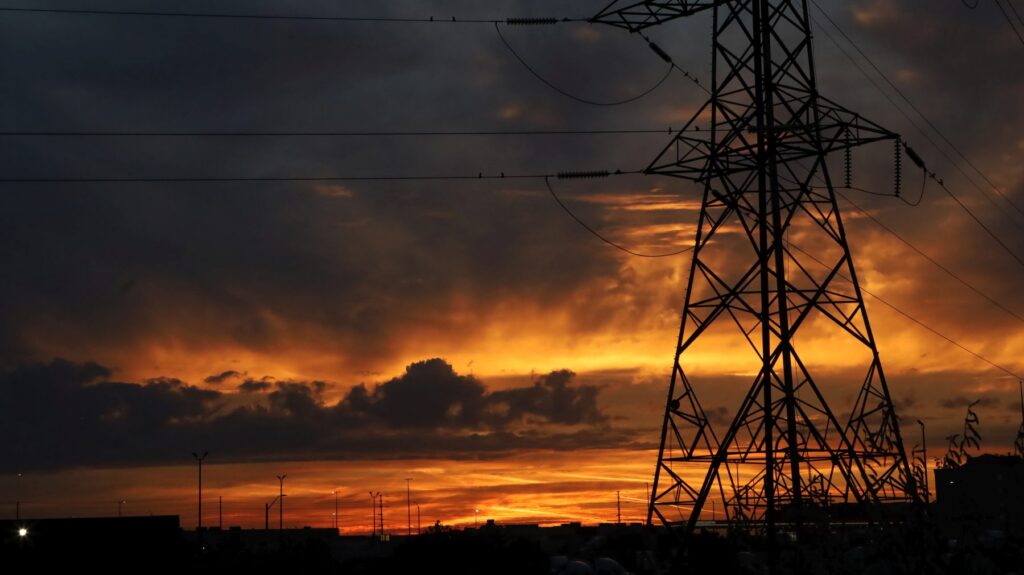
Approach
The challenge was part of a group project exploring various aspects of climate change. While photographing a municipal waste management facility, I noticed the setting sun breaking through layers of cloud behind a network of power transmission towers. Although the facility itself did not become the primary subject, the scene immediately caught my attention. The glowing horizon appeared almost like a lake of fire beneath the clouds, while the industrial structures hinted at the relationship between human activity and the environment. Recognizing that this unexpected scene told a stronger visual story, I shifted my attention from the original subject and captured the moment.
In-Camera Decisions
I photographed the scene handheld, as the available light allowed for a sufficiently fast shutter speed. To preserve detail in the bright sky and deepen the dramatic mood, I selected an exposure of 1/500 second, allowing the power towers and foreground elements to fall into silhouette. A daylight white balance setting maintained the natural warmth of the sunset colours while preserving contrast between the glowing horizon and the darker clouds above.
What Made It Work
What first appears to be a fiery landscape gradually reveals a more complex story. At first glance, the glowing horizon can appear almost like a lake of fire stretching across the landscape. As the viewer spends more time with the photograph, the silhouettes of power transmission towers, utility poles, and the distant cityscape begin to emerge from the shadows. This progression from abstraction to recognition encourages a deeper engagement with the image. The dramatic clouds add atmosphere, while the contrast between the natural beauty of the sunset and the industrial structures creates a visual tension that reinforces the broader theme of climate change and humanity’s relationship with the environment.
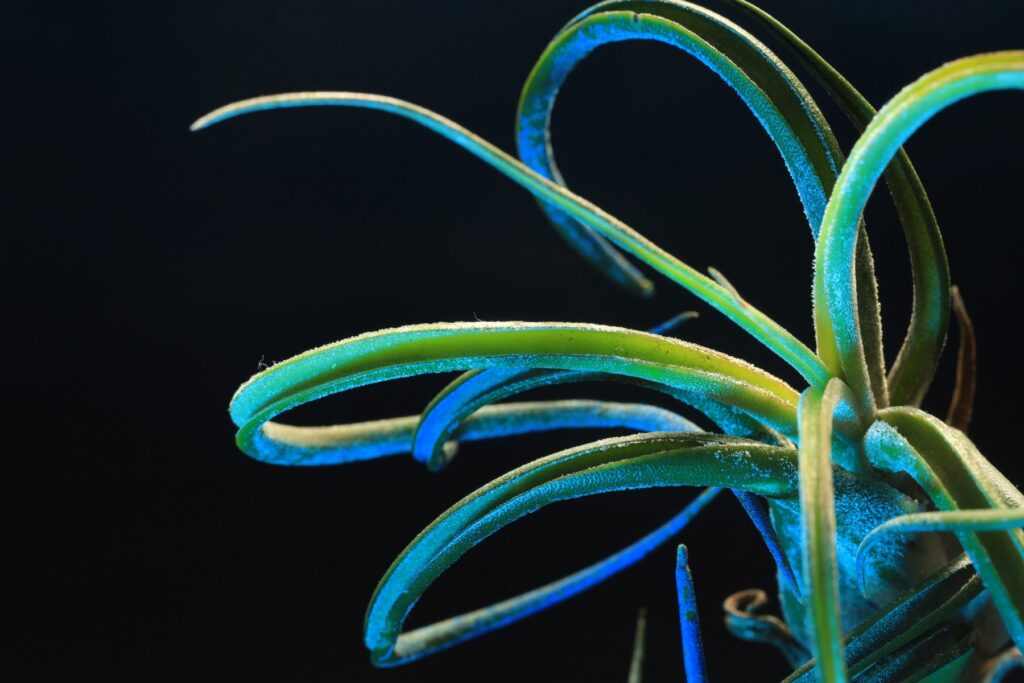
Approach
The challenge was to illustrate the scientific discipline of Biology through plants and animals. I wanted to create an image that felt as though it belonged in another world rather than a grocery store plant display. After selecting an air plant for its rich green colour and naturally curling leaves, I brought it into the macro studio. By introducing black light from beneath the plant, I was able to create unusual blue highlights and transform an ordinary subject into something more mysterious and visually intriguing.
In-Camera Decisions
I used a tripod and a 100mm macro lens to capture the image. A black background eliminated distractions and allowed the shape and colour of the plant to become the primary focus. Positioning the black light beneath the subject produced the distinctive blue highlights along the edges of the leaves, helping to create the desired otherworldly appearance. Working at f/13 provided sufficient depth of field to keep the front leaf sharp while allowing the remaining leaves to gradually soften, creating depth and directing attention toward the primary point of focus.
What Made It Work
The photograph transforms a common air plant into a subject that feels unfamiliar and open to interpretation. The sweeping curves of the leaves create a sense of movement that guides the viewer’s eye throughout the frame, while the black background isolates the plant and removes any sense of scale or location. The combination of green and blue tones adds visual interest and enhances the impression that the subject belongs in a different environment. Careful control of focus keeps attention on the foreground leaf, while the gradually softening forms behind it add depth and dimension. The result is an image that encourages curiosity by inviting the viewerinviting the viewer to decide whether they are looking at a plant, a sea creature, or something from another world.
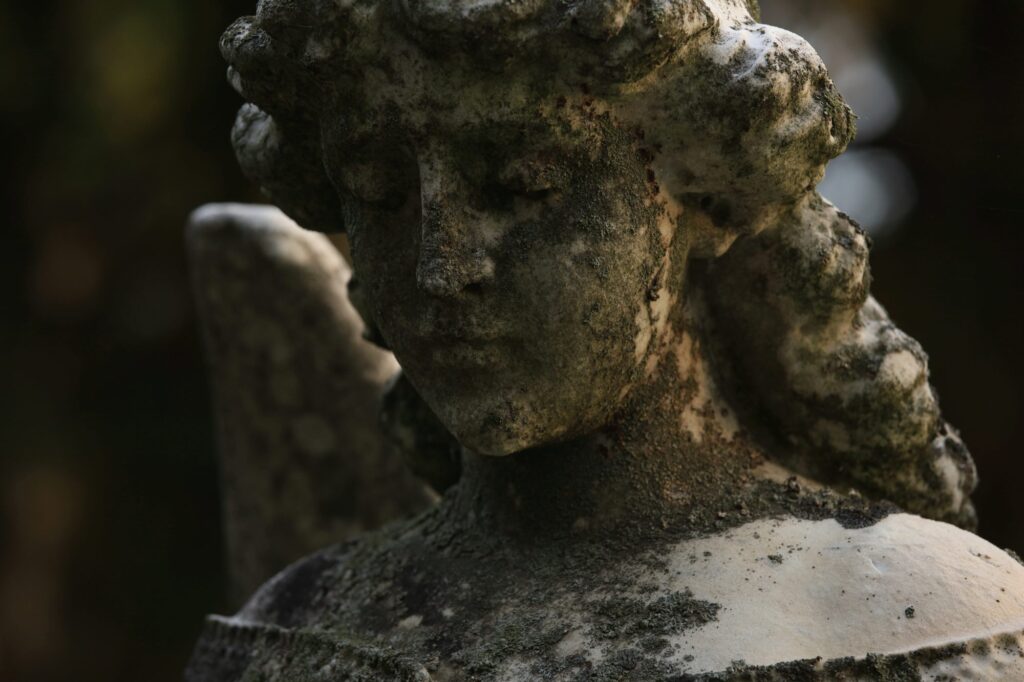
Approach
The challenge was to use flash to highlight a darker subject. I have always been drawn to older statues, so I chose this weathered angel as my subject. Arriving at the cemetery before sunrise gave me time to explore compositions and wait for the first warm light of day. The combination of aging stone, soft morning light, and a quiet setting made the statue an ideal subject for the challenge.
In-Camera Decisions
I mounted the camera on a tripod and used the camera’s timer to eliminate movement during the exposure. The flash was positioned to illuminate the shadowed side of the statue while preserving the natural warmth of the sunrise. Although the flash did not fully illuminate the far-right side as intended, likely due to an incorrect flash setting, the balance between the flash and the ambient morning light created an effect that I found visually appealing.
What Made It Work
What drew me to this scene was the contrast between timelessness and decay. The statue’s graceful features remain recognizable despite years of weathering, while the moss, stains, and rough textures tell their own story of time passing. By using a shallow depth of field and careful framing, I was able to isolate the figure from its surroundings and emphasize its quiet, almost contemplative presence.
The Story Behind These Creative Photography Challenges
Learn How Exposures Lite Works →
These creative photography challenges represent a variety of ideas explored throughout many years of Exposures and Exposures Lite sessions. Each image began as a creative exercise shaped through discussion, observation, and thoughtful in-camera decisions. Every six-week session brings new themes and fresh interpretations.
Interested in exploring creative photography challenges yourself?
Find Out About Joining →